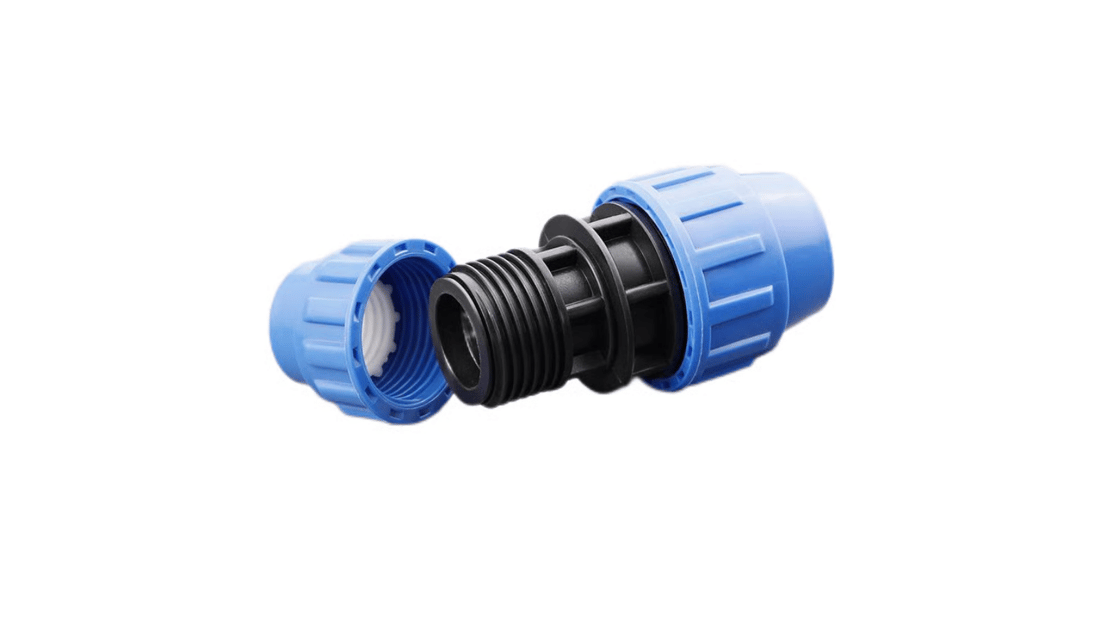
PP Compression Reducers are specialized fittings designed to connect polyethylene pipes of different diameters securely. Made from polypropylene (PP), these reducers allow seamless transition between pipes, ensuring system efficiency and reliability. Their primary purpose is to reduce pipe size in fluid transport systems while maintaining pressure integrity and preventing leaks.
Material Advantages: Why Polypropylene is Ideal for Compression Reducers
Polypropylene used in PP Compression Reducers offers exceptional chemical resistance, durability, and lightweight properties. Unlike metal counterparts, PP fittings resist corrosion, UV damage, and chemical degradation, making them ideal for diverse applications such as water supply, irrigation, and chemical processing. The polymer’s flexibility also eases installation and extends service life.
Design Features and Mechanism of Compression Fittings
The compression mechanism in PP Compression Reducers involves a tight seal created by compressing a gasket around the pipe surface. This design eliminates the need for welding or threading, reducing installation time and cost. The fitting typically includes a nut, olive (compression ring), and body, ensuring a strong mechanical bond and leak-tight connection between pipe sections of varying diameters.
Applications Across Industries and Systems
PP Compression Reducers are widely used in plumbing, irrigation systems, chemical plants, and industrial fluid networks. Their versatility allows for smooth diameter transitions in water pipelines, agricultural drip systems, and even in HVAC installations for efficient fluid management. The non-toxic nature of PP makes these reducers safe for potable water systems as well.
Installation Best Practices for PP Compression Reducers
Proper installation is critical for optimal performance of PP Compression Reducers. Pipes must be cut cleanly and squarely; the fitting components should be free of dirt and debris. Tightening the compression nut requires care to avoid over-compression which could damage the gasket or pipe. Following manufacturer torque guidelines ensures a durable and leak-proof joint.
Compatibility with Various Pipe Materials
While PP Compression Reducers are primarily designed for polypropylene pipes, they also offer compatibility with other materials such as polyethylene (PE) and PVC under certain conditions. This flexibility enhances system design options, allowing integration of different pipe materials without compromising joint integrity, provided proper adapters and seals are used.
Benefits Over Traditional Joining Methods
Compared to welding, flanging, or solvent bonding, PP Compression Reducers require less specialized labor and equipment. They provide faster, cleaner installation and are easily removable and reusable. This adaptability reduces downtime during maintenance and system modifications, making them a cost-effective solution for pipeline resizing needs.
Performance Under Pressure and Temperature Variations
PP Compression Reducers exhibit reliable performance in moderate pressure and temperature environments typically found in residential and light industrial applications. They maintain their structural integrity in pressures up to the manufacturer’s rated limits and resist temperature fluctuations without deformation or loss of sealing, important for stable system operations.
Maintenance and Longevity Considerations
Due to the chemical stability and inert nature of polypropylene, PP Compression Reducers require minimal maintenance once installed correctly. Routine inspections for leaks and mechanical wear help extend their lifespan. Properly installed reducers can function effectively for decades, outperforming many metal fittings in corrosive or harsh environments.
Future Trends: Innovations and Industry Demand
Industry trends indicate growing demand for eco-friendly and efficient pipeline solutions, driving innovation in PP Compression Reducer design. Advances focus on enhanced sealing technologies, greater pressure ratings, and integration with smart monitoring systems. As infrastructure modernizes, these fittings are set to play a vital role in sustainable fluid transport.
Quote Inquiry
contact us